
Matcha Powder for Beverages, Lattes and Tea Drinks
Beverage matcha must perform after mixing with milk, cream, syrups, ice, foam, or ready-to-drink processing. Matcha Star helps beverage brands and chains select grades based on color stability, dispersibility, flavor balance, cost range, and store or factory workflow.
 Beverage-grade matcha for chain drinks and product development
Where Beverage Grade Works Best
The right beverage matcha should stay visually attractive and taste balanced in the final recipe, not just in dry powder form.
Matcha Latte
Milk compatibility, color visibility, and smooth flavor are the main selection points.
Milk Tea and Foam Drinks
Recipes often need stronger color and consistent tea aroma under sugar, milk, and toppings.
Iced and Blended Drinks
Dispersibility and color stability matter when the product is served cold or blended.
Ready-to-Drink Development
Batch testing should review flavor, sediment, process compatibility, and shelf-life requirements with the buyer team.
Beverage Grade Evaluation Points
| Purchasing Topic | What to Confirm | Why It Matters |
|---|---|---|
| Milk compatibility | Test with milk, plant milk, creamer, or dairy formulation used in the actual recipe. | Different bases change color, bitterness, and aroma. |
| Dispersibility | Check whisking, shaking, pre-mixing, and powder handling workflow. | Operational efficiency matters for chains and factories. |
| Color after mixing | Compare color in finished drinks, not only dry powder. | The final consumer sees the recipe, not the powder alone. |
| Cost range | Clarify cup cost, target selling price, and annual demand. | Cost planning helps choose a stable grade for scale. |
Factory and Grade References
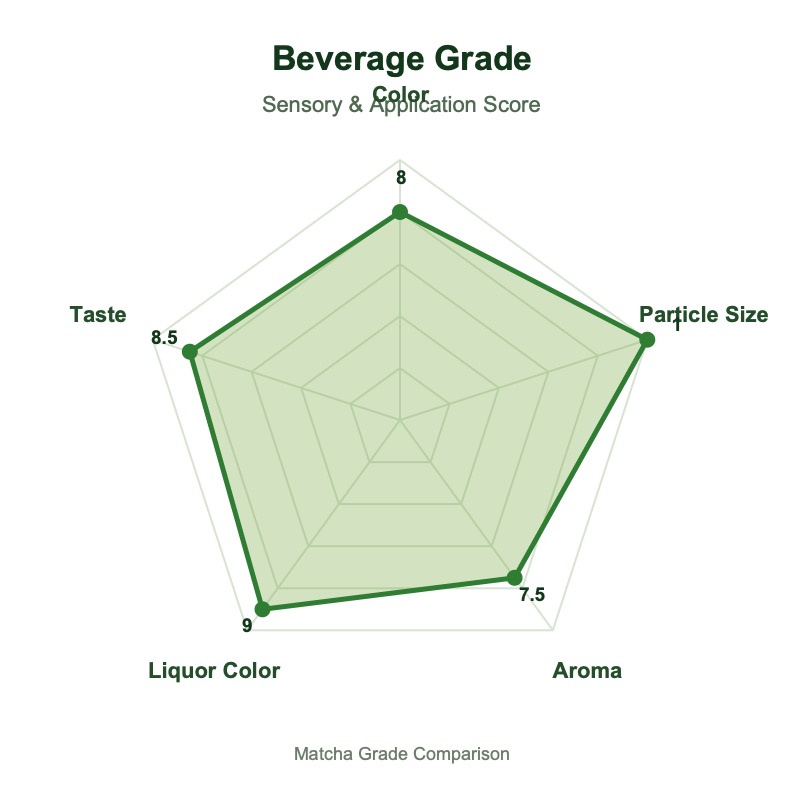
Beverage Grade Radar
Reference comparison for beverage grade matcha performance.
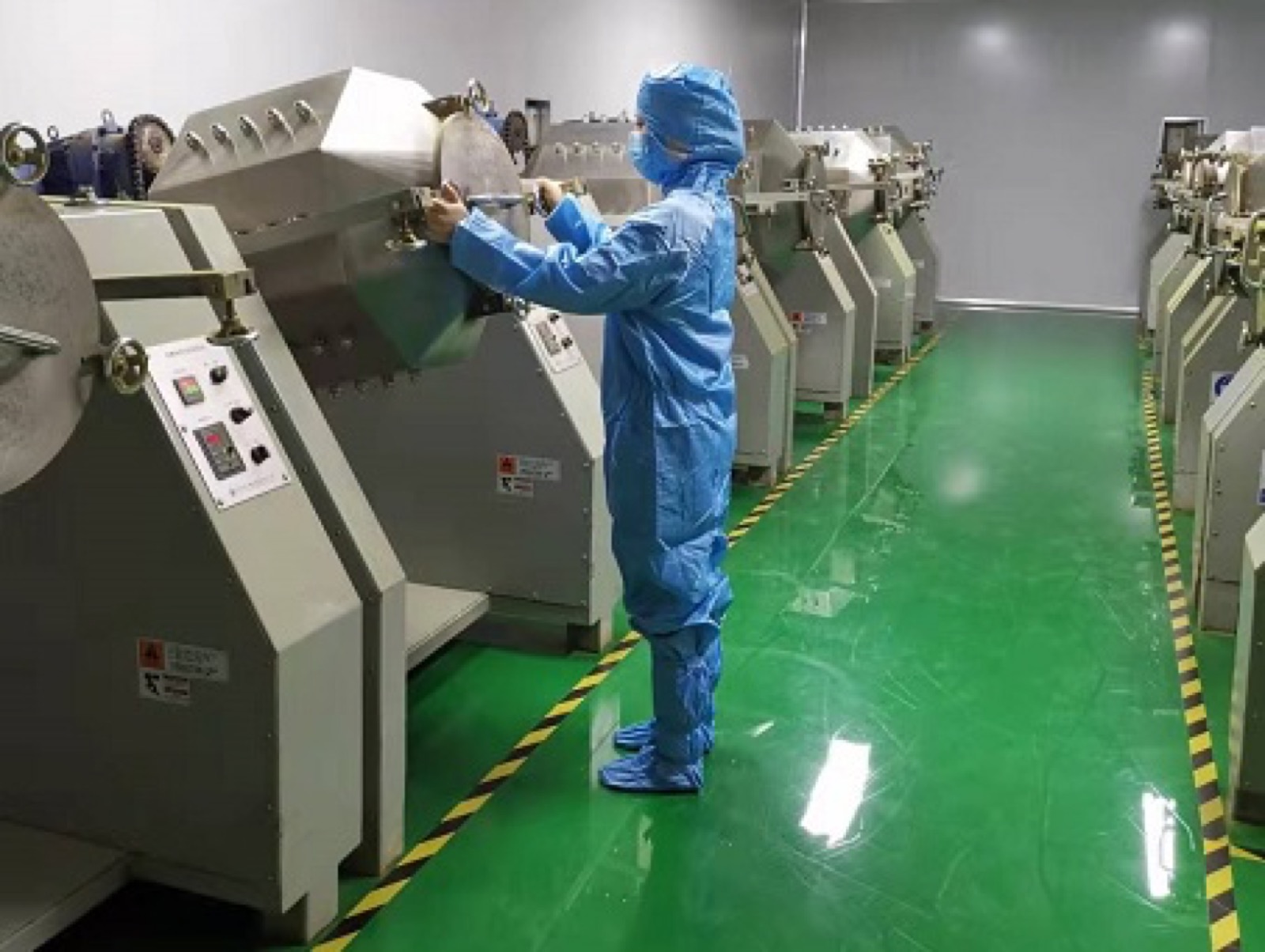
Low-Temperature Milling
Grinding capacity supports stable beverage-grade supply for repeated orders.
From Sample Matching to Export Delivery
Request Beverage Matcha Samples
Share your target application, estimated order quantity, destination market, packaging format, and any color or flavor benchmark. Matcha Star can recommend a suitable grade, prepare samples, and provide specifications for purchasing review.